Looking Backwards
When I was a child I got an N64 for Christmas, like many children did back in the early 90s. I got several games, including Super Mario 64 and The Legend of Zelda: Ocarina of Time (OOT). Both great games, with OOT getting a sequel on the same system a few years later named The Legend Of Zelda: Majora’s Mask (Majora’s) 1.
I never finished Majora’s as a child. I tried, but the time system was a tad difficult to deal with when I was that small. For those who are not aware of the game, here is a brief rundown:
Link, returned to being a child after the events of OOT, is exploring around doing his thing when the Skull Kid, wearing Majora’s Mask, steals Link’s ocarina and runs off with it. Link, dismayed, goes after the Skull Kid to try to steal it back, but has been transfored into a Deku form by the Skull Kid. Link goes through some trouble to get the Ocarina back, and in doing so learns the Skull Kid intends to destroy Clock Town with the moon. Link can use the ocarina to go back in time three days to just after he arrived in Clock Town. Link keeps using these time-travel techniques to go back in time to this same period as he unravels how to stop the moon from crashing into the town.
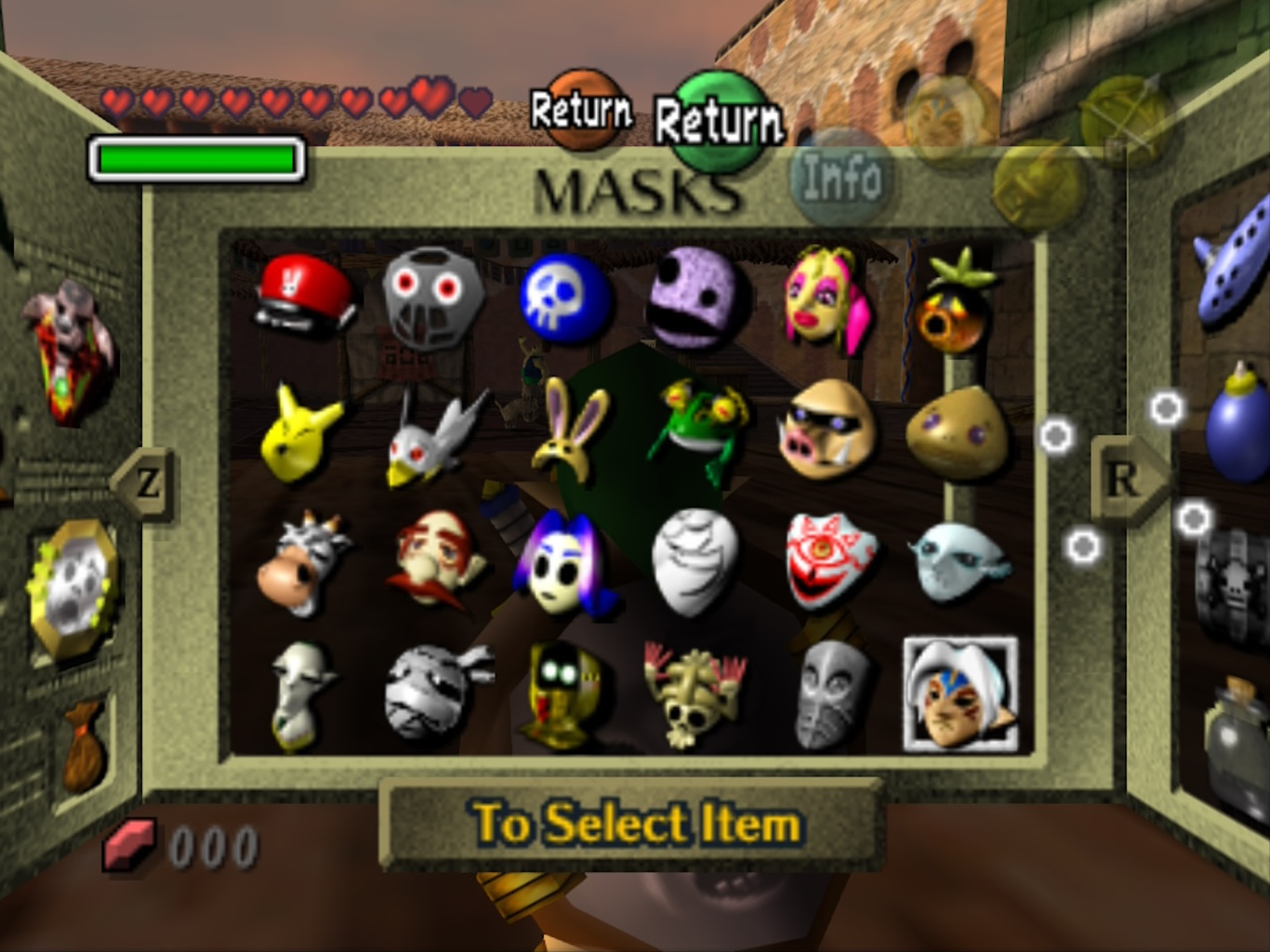
That is the very thin version of the premise of the game, but it will suffice for now. Certain activities can only take place on certain days, such as real life, and when you travel back to the original day you lose all of your money/arrows/bombs but you keep important collectibles such as masks and key unlocks such as the fire arrow, etc.
This time travel mechanic is what was a little bit of a blocker for me as a child. Fast forward to my 30’s and this concept is not so confusing to me, so I set out to complete this game and close a chapter on my childhood.
As an adult playing this game I was able to shift my focus to what the story was trying to say, or the things happening to the other characters, as opposed to just trying to make it through the temples. Additionally, I decided that I would use an online guide to help get all of the masks in the game since my time is more limited than it was when I was living at home as a child.
The Dark World
Majora’s is considered one of the darker games in the franchise, and I am not talking about just the color palette (even though it is a tad darker there too). A lot of the story points revolve around suffering, death, and things in-between.
The three masks that Link wears to transform into other creatures are taken from dead characters.
The Deku mask is supposedly the spirit of the Deku Butler’s son, who has “died” by being turned into an actual tree/shrub. 2
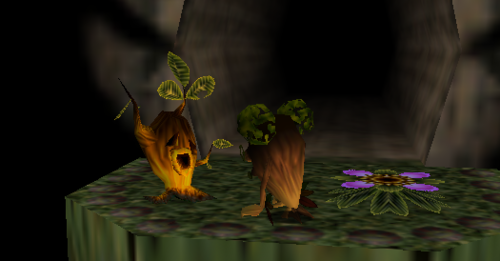
The Goron mask is the face of a famous Goron warrior. The game plays into this in a humorous way by having various Goron NPCs recognize you as the dead Goron when you are wearing it and they will often comment about how they thought you were dead but they guess that they were mistaken.
The other transform mask that comes from a dead character is when Link attempts to save the drowning Zora by getting him to the beach. Link succeeds in getting him to the beach but not in saving his life. When the Zora dies then Link gets the Zora mask which he can use to transform into one.
Other masks in the game also have dark stories attached to them. The Captain’s Mask resembles a long dead military captain who’s soldiers remain loyal even in death. Link can use this to talk to the skeletons in the graveyard and elsewhere and either dismiss them from their duties (free their spirits) or instruct them to do things such as open a specific grave so Link can get some items.
The Bremen Mask (a chicken mask) is used to get small animals to follow you in a line. If you go to the ranch and into the Cucco’s pen you can find Grog who mentions that his only regret with the world ending is that he is unable to watch these little Cuccos grow up to become adults. Link can grow them up by getting them all to march behind him wearing the mask. Grog gives Link the Bunny Hood for this, which is a mask that allows Link to run faster while wearing the bunny ears.
Kamaro’s mask is given to Link from the spirit of the great dancer Kamaro. Link gets it by playing the Song Of Healing to his dancing spirit. The mask resembles him, and Link can use it to do a remarkably groovy dance. If Link performs this dance for the Rosa Sisters in West Clock Town they will give Link a piece of heart and continue to do that dance for the remainder of the cycle until Link goes back in time again.
The Gibdo mask allows Link to walk among Gibdos without them being a threat. Gibdos in The Legend of Zelda are like mummies in old horror movies - cloth wrapped entities that are hostile, and undead. Going to the music box house after getting this mask will allow Link to save Pamela’s father, who is partially transformed into a Gibdo. The cut-scene is honestly a little terrifying. The father and daughter have a long hug and family moment after Link cures the father.
Odd Things
Some odd things also exist in the game, as is true for any game in The Legend Of Zelda series.
One prime example is the banker. The banker in West Clock Town allows Link to bank his rupees between time cycles. The banker also gives Link rewards for having saved up certain rupee totals. What is odd about this is how does the banker remember Link and keep the rupee total accurate?
Link can help the child Romani at the Romani Ranch. Link can assist her with defending the ranch from what is implied to be aliens. The come a few days before the festival. The little girl has been practicing with her bow for this event. If you beat the game you can see her older sister watching her practice with her bow. This is significant because I think that her sister tells her that practicing with a bow is silly and to focus on other things.
There is a woman who tells stories that are so long and boring that Link needs to wear the All-Night Mask in order to stay awake during them. This mask can be acquired from the curiosity shop on the final day if Link managed to stop the old bomb shop lady from being robbed at midnight on the first night.
Saving the oddest for last, there is a hidden grotto under the giant log in Termina field that Link can access by using a bomb. Inside of this grotto are two cows, which can be milked if Link plays Epona’s Song to the cows.
The Anju Quest Line
Plot
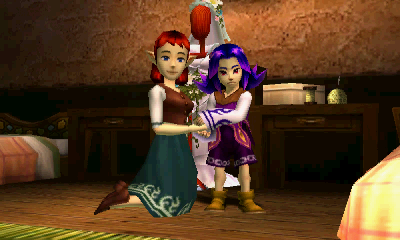
Anju is the receptionist at the Stock Pot Inn located in Eastern Clock Town. 3
Anju is distraught because she is to be wed in a couple of days but her fiance, Kafei, is nowhere to be found. If Link goes upstairs and talks to Mama he can get a mask that allows him to ask around for Kafei.
Eventually Link can find Kafei hiding out in the laundry district of Clock Town. Kefei will explain that the Skull Kid turned him into a child and that is why he is hiding from Anju.
Child Kafei gives Link a medallion to give to Anju to prove that Link spoke to him. After some more back and forth as the middleman Link goes and helps Kafei try to get his wedding mask back.
The pair get the mask back from the thief’s hiding place. Link also was given a letter to Mama from the curiosity shop employee earlier, because Kafei had helped identity the thief (that you just helped him get the mask back from). Link has two choices for this letter to Mama, and if you want to be a game completionist you have to do this quest twice. Link can give the letter directly to Mama on the night of the final day if Link goes to the Milk Bar and finds her sitting there drinking as the moon comes crashing down. She gives Link a keep-able bottle full of Chateau Romani, the best milk in the game.
Alternatively Link can give the letter to the Postman, who is having a sort of existential crisis in his house. He wants to leave, but feels a sense of duty to keep delivering the mail. Link can give him this letter, which is marked as High Priority, and the Postman will get on his uniform and start running it over to Mama. If Link waits outside of the bar for the Postman to come out, the Postman will wait by an exit to the town for a little bit. If Link talks to the Postman while he is standing there he will tell Link how he has been told to run and that it is okay, and that he is finally free of his daily schedule. he will give Link the Postman’s hat mask.
Since Anju knows that Kafei is still around, she decides to stay in town on the last night that the moon is going to fall. Kafei meets her in her room during the final moments of the moon crashing down and they agree to die together, combining their wedding mask’s into the couple’s mask which Link is given.
Link then uses the ocarina to play the Song Of Time to go back to the dawn of the first day, where the couple’s issues are no longer solved.
Other Things Going On In The Background That Are Related
There are a lot of optional side things going on with this quest. Link can overhear Anju’s grandmother pretending to be senile by saying she has already eaten in a bid to avoid eating more of Anju’s cooking.
Another example is that if Link tries to check into the Inn on the second day, Anju will confuse Link with a Goron who has the same name and will give Link a room key. After this Goron arrives he is denied a room and decides to sleep outside of the Inn. He comments on how the weather is decent.
Link can also use a telescope to help identify the thief that has been pestering the curiosity shop (mentioned earlier).
There is a handful of other events, and you can read about them here: https://www.zeldadungeon.net/majoras-mask-walkthrough/anju-kafei-quest/
Reflections
The couple teaches us that love triumphs even in dark times. That even if the world is literally ending people still care about us. Just because you do not hear from someone does not mean they are not thinking about you.
They tell us to be brave in the face of adversity and seek out that which you truly desire. They also tell us that maybe we should be truthful if we get our named mixed up at an inn reservation because someone might end up sleeping outside.
Most importantly they teach us to keep moving forward.
Summary And Main Reflection
When I finished this game, I joked about having played a game where the entire play-through you kept thinking how annoying things were, but when you roll credits you lean back and give the game a 9/10.
The game was great, the story was great, and the themes were great. I wish Nintendo would return to some of the darker themes for some of their games in this current generation.
I enjoyed collecting all the masks, even if I had to use a guide. I doubt I could have found them all without a guide without spending far too much time running around the world and reading all of the hints the Mask of Truth gives you when you wear it and interact with the eye stones.
As for any complains, well the limitations of the game mainly stem from the controls, I think. Back when this game first came out these sorts of 3D adventure games were new so we tolerated these controls, but the single-stick movement was a little frustrating, especially in the bonus rolling stage for one of the children on the moon.
I strongly recommend this game to anybody interested. I would push them to play the “3D” version if they can as it has updated graphics and some quality of life changes over the N64 version I completed.
-
This game is an actual direct sequel to the story. Fans of the series will know that only a handful of games take place in the same series of events as a previous game, even though the stories due tend to continue each other (depending on the timeline). ↩︎
-
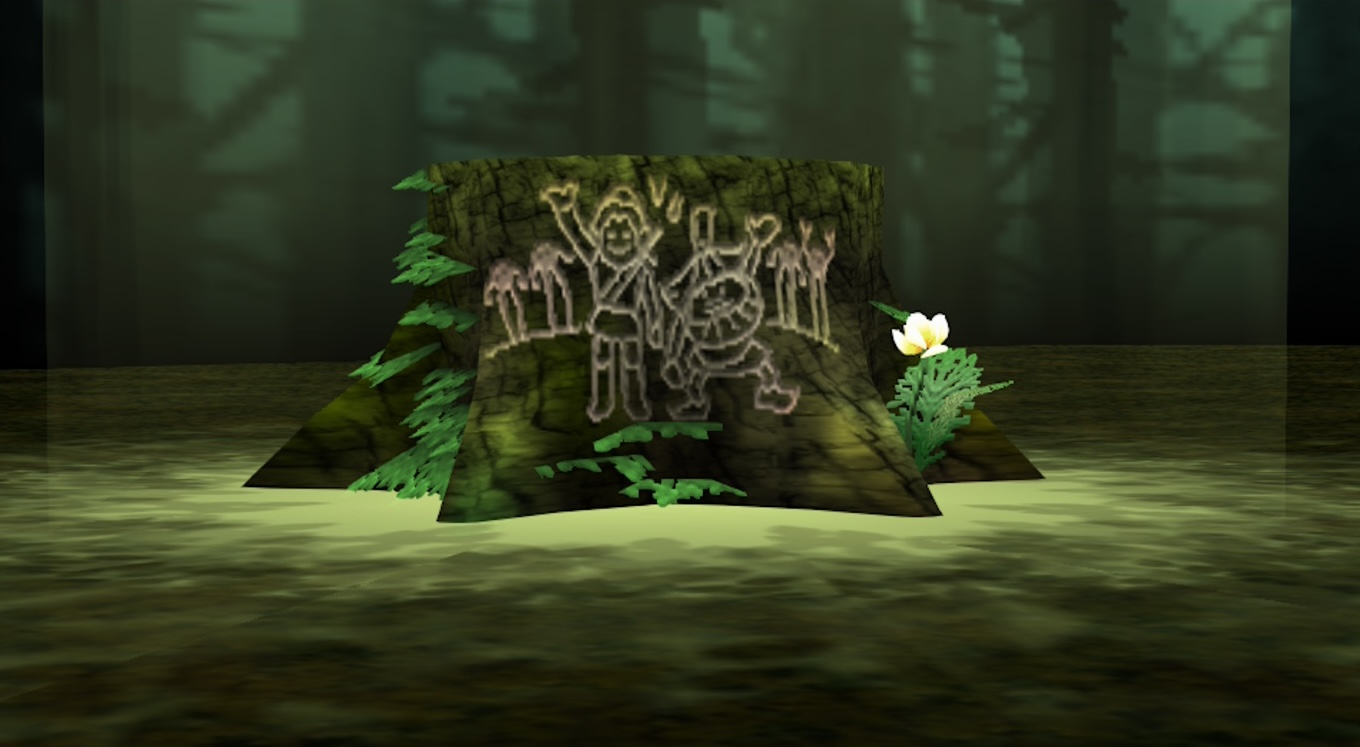
In The Legend Of Zelda: Link To The Past a father also loses his son by having his son turn into a tree in the dark world. Link get’s this person’s flute (ocarina) and can use it to teleport. ↩︎
-
Anju is also a recurring character in The Legend of Zelda: The Minish Cap, which happens before Majora’s Mask in the timeline. Kafei is not in that game, however, so maybe they had not met by then. ↩︎